
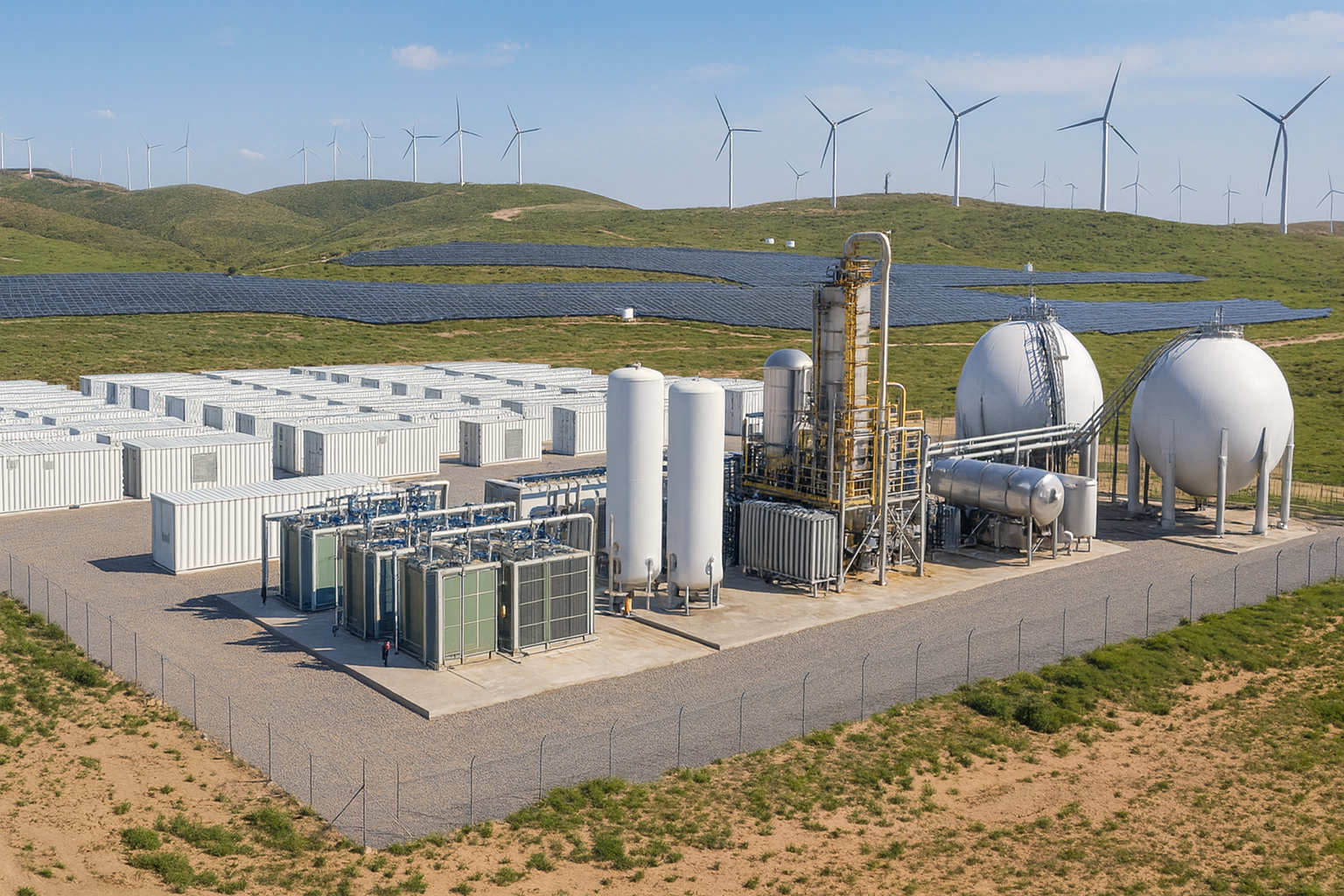
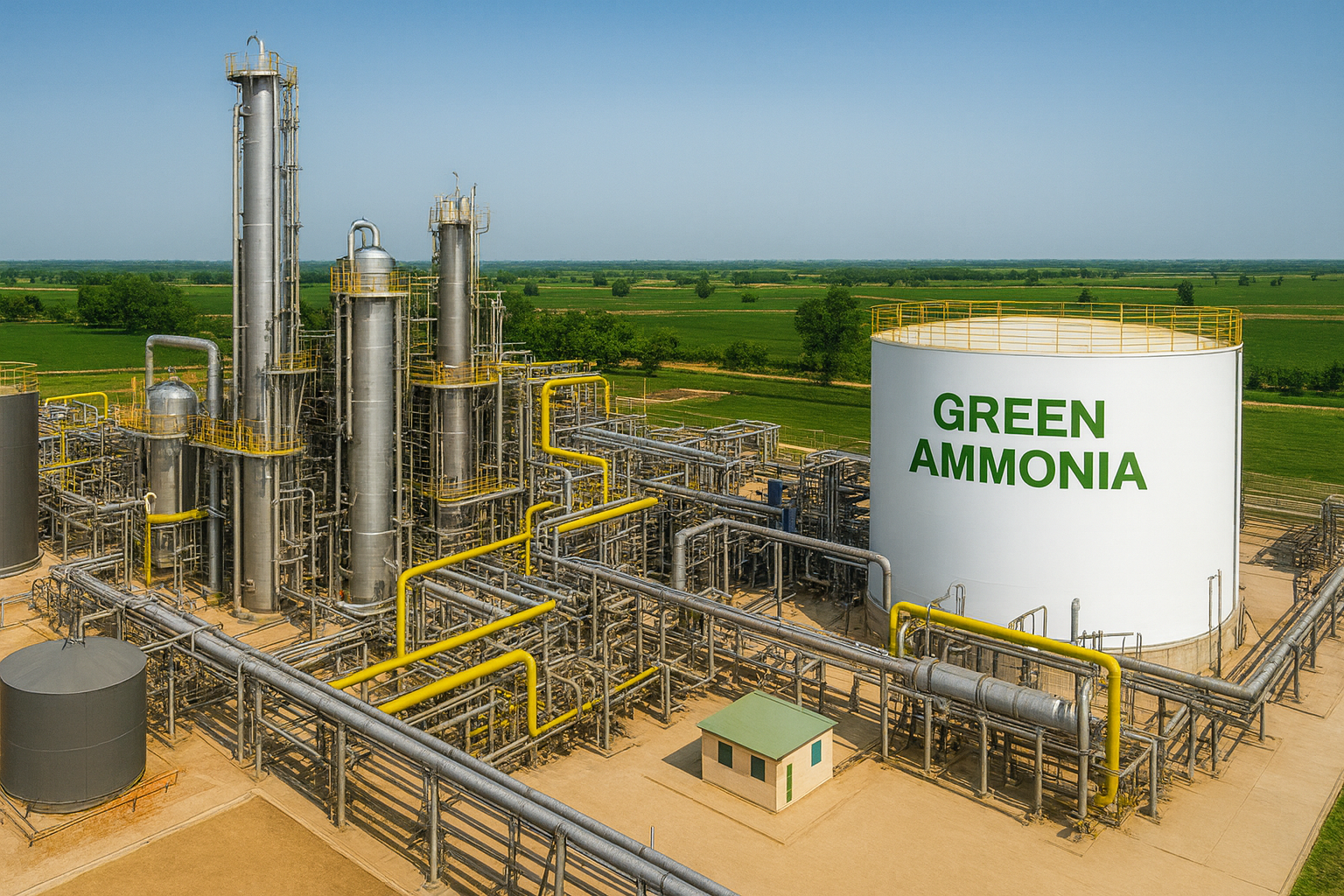
Green Ammonia Generation
Green ammonia is produced by synthesizing ammonia (NH₃) using green hydrogen derived from renewable electricity and nitrogen separated from atmospheric air, without the use of fossil fuels. Renewable power from sources such as solar, wind, or hybrid renewable systems is used to split water through electrolysis, generating green hydrogen and oxygen. Nitrogen is obtained from ambient air using air separation technologies such as cryogenic air separation units (ASU) or pressure swing adsorption (PSA). The hydrogen and nitrogen are then reacted in a Haber–Bosch synthesis loop under elevated pressure and temperature in the presence of a catalyst to form ammonia.
Features and Uses of Green Ammonia
✔ Hydrogen Carrier for Industrial Energy Transport, Storage and Power Generation.
✔ Maritime and Heavy Transport Fuel.
✔ Near-zero lifecycle emissions, enabling deep decarbonization.
✔ Alternate fuel for Gas Turbines and Gas Engines.
✔ Energy security, reducing dependence on imported fossil fuels.
Solution Module Highlights
Performs detailed hourly Global Horizontal Irradiance (GHI) and Plane of Array (POA) Irrandiance calculation by evaluating actual factors like solar time, hour angle,
declination, Zenith Angle, Solar Azimuth and angle of Incidence using the inputs tilt angle, tracking, Direct Normal Irradiance (DNI) and
Direct Horizontal Irradiance (DHI). (DNI & DHI are obtained from site solar hourly data generated by module.)
Using this hourly GHI value & POA Irradiance, hourly PV electricity generation is worked-out.
Similarly, the hourly wind speed and air density data generated by module, along with wind turbine input data (Rated Power,
Rated Speed, Rotar Diameter, Hub Height, cut-in/cut-out speeds, OEM power curve), are used to calculate wind shear exponent,
wind speed at Hub Height, density correction, Coefficient of Performance (Cp) and hourly wind electricity generated.
Based on the wind shear exponent value, the site terrain is validated. Based on the wind speed at Hub, module establishes Site Wind
Classification and Turbulence Classification as per IEC 61400-1, which will help in selecting correct wind turbine generator for the project.
Solution module intelligently balances charging and discharging sequence based on the power demand and accordingly establishes the
annual charging cycles to evaluate the battery replacement life.
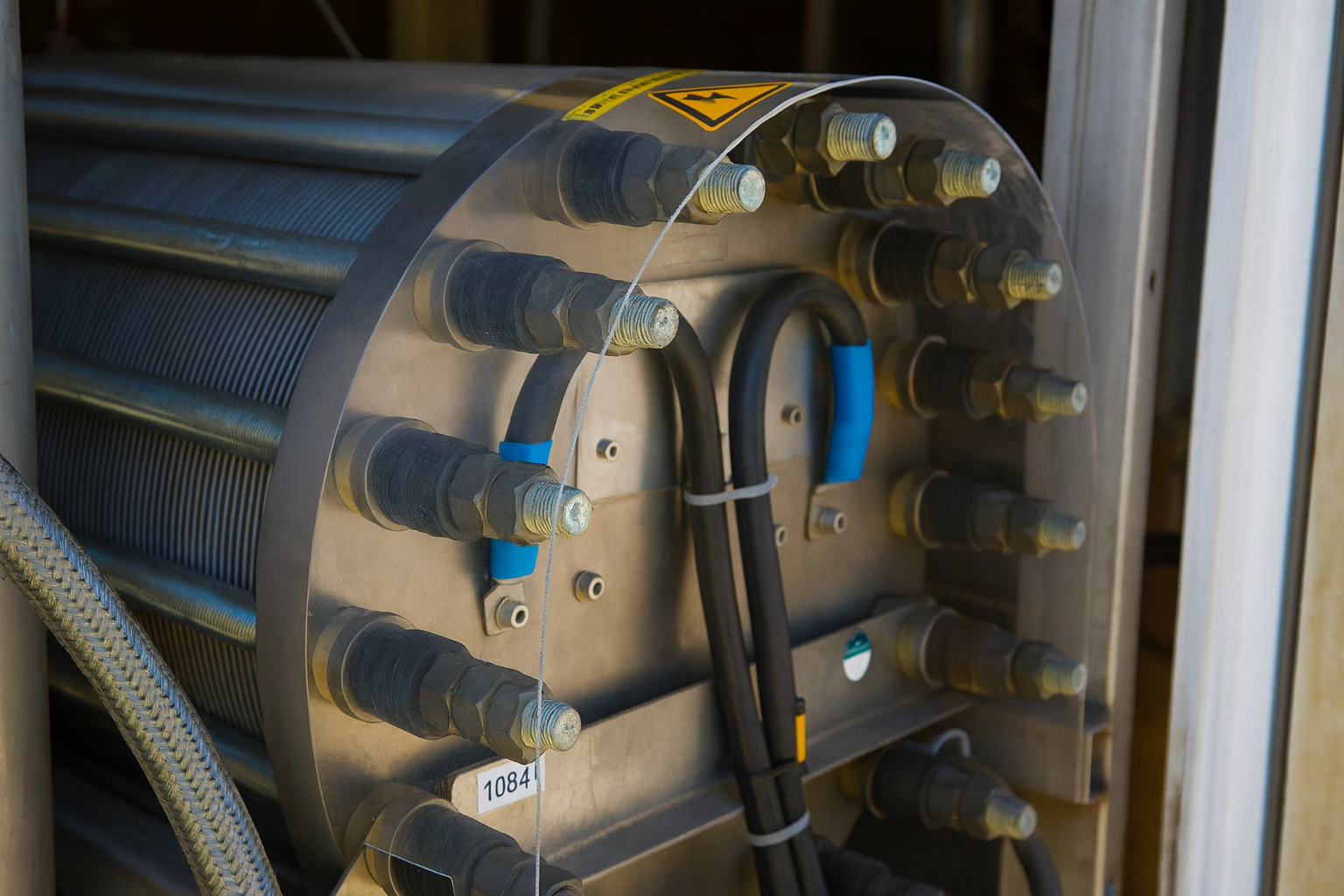
Key Inputs
✔ Establishes project identity, reference details, currency and geographic coordinates for site assessment.
✔ Defines the renewable energy sourcing mix between grid, solar and wind, along with their allocation shares.
✔ Specifies electrolyser technology, plant size, efficiency, load factor and treated-water needs.
✔ Utilizes PV module library data, gets OEM data including technology type, efficiency, power rating, temperature coefficients, NOCT, and physical dimensions.
✔ Captures key system design and operational parameters such as tilt, tracking, inverter efficiency, system losses, layout ratios, and replacement assumptions.
✔ Utilizes Wind Turbine library data, gets OEM data including wind turbine characteristics like model, rated power, rotor dia, hub height, rated speed, cut-in/cut-out speeds, wind energy generator cost, system losses and OEM power curve.
✔ Outlines BESS configuration, including storage capacity, depth of discharge, autonomy, round-trip efficiency, degradation, replacement strategy, and cost.
✔ Incorporates operating assumptions such as auxiliary consumption, O&M costs, working capital, and water usage.
✔ Details of CAPEX inputs for electrolyser, solar, wind and BESS systems, along with marginal infrastructure costs.
✔ Covers operating assumptions such as auxiliary consumption, O&M expenses, working capital norms and water cost.
✔ Defines financial parameters including equity structure, interest rates, tax/depreciation schedules and discount rate.
✔ Sets the carbon accounting framework through baseline emission factors, lifecycle intensities and carbon credit pricing.
Key Results
✔ Reports actual hydrogen and ammonia production rates, electricity consumption and water use based on real operating load factors.
✔ Summarises solar and wind generation outputs, including gross and net renewable electricity delivered annually.
✔ Captures BESS behaviour such as charge/discharge cycles, usable energy, throughput and system losses.
✔ Quantifies total renewable power available to the electrolyser and the balance remaining as exportable green power.
✔ Consolidates investment outcomes including total CAPEX, borrowing levels, IDC and installed cost per kW.
✔ Presents carbon performance results including lifecycle CO₂ intensity, per-kg emission reductions and total annual savings.
✔ Displays additional revenue generated from carbon credits due to avoided emissions.
✔ Highlights project profitability across hydrogen sales, power export and carbon revenue streams.
✔ Provides key techno-economic indicators such as cost of generation, levelized costs and annual revenue potential.
✔ Offers a clear view of overall project efficiency, financial viability and environmental benefit.
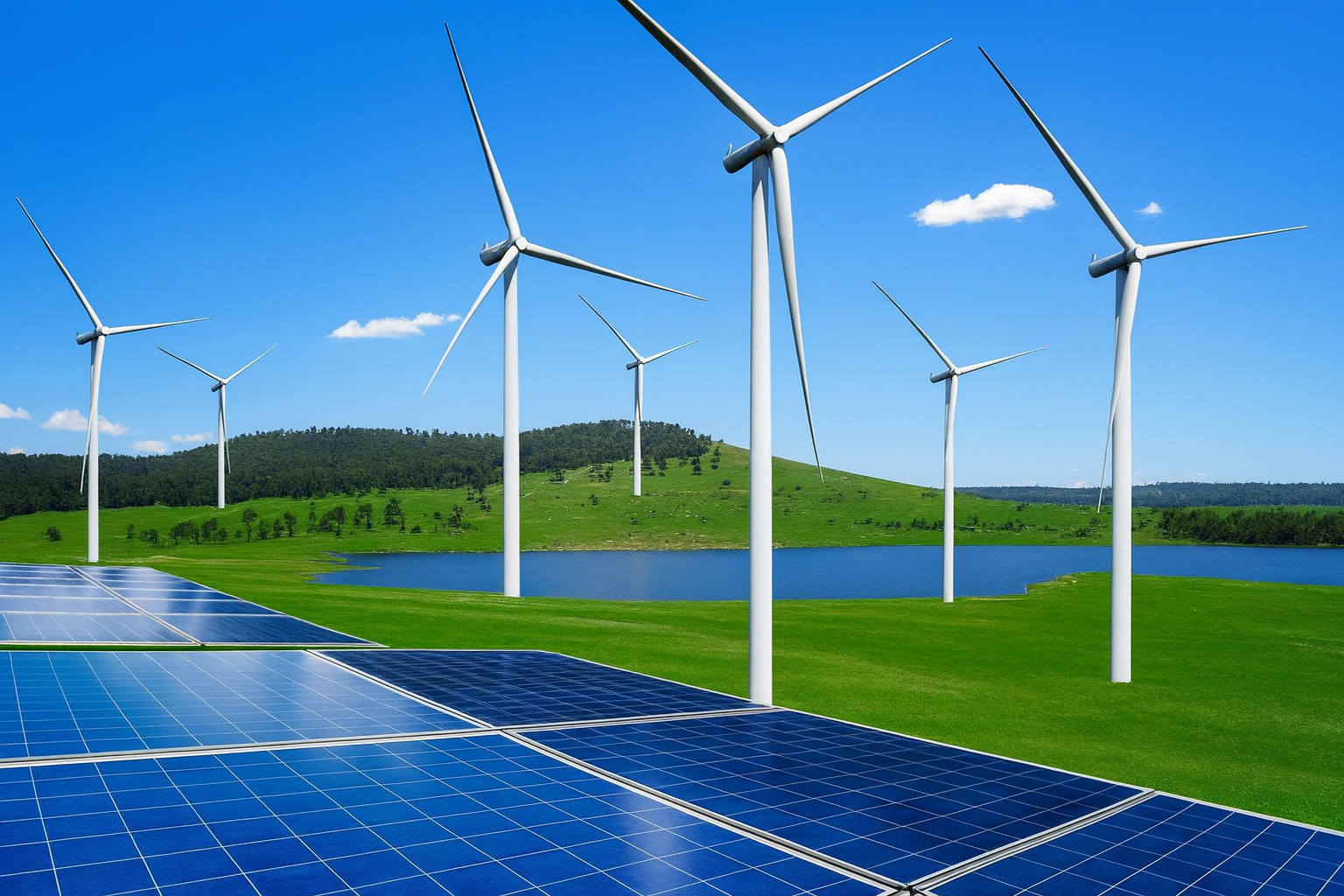
Explore cGEM solution modules
Move between renewable energy (Solar/Wind/Hybrid), storage, hydrogen, and ammonia feasibility modules.
Evaluate the project economics inside cGEM
Use the cGEM platform to move from project inputs to engineering calculations, financial modeling, carbon footprint analysis and report outputs.