
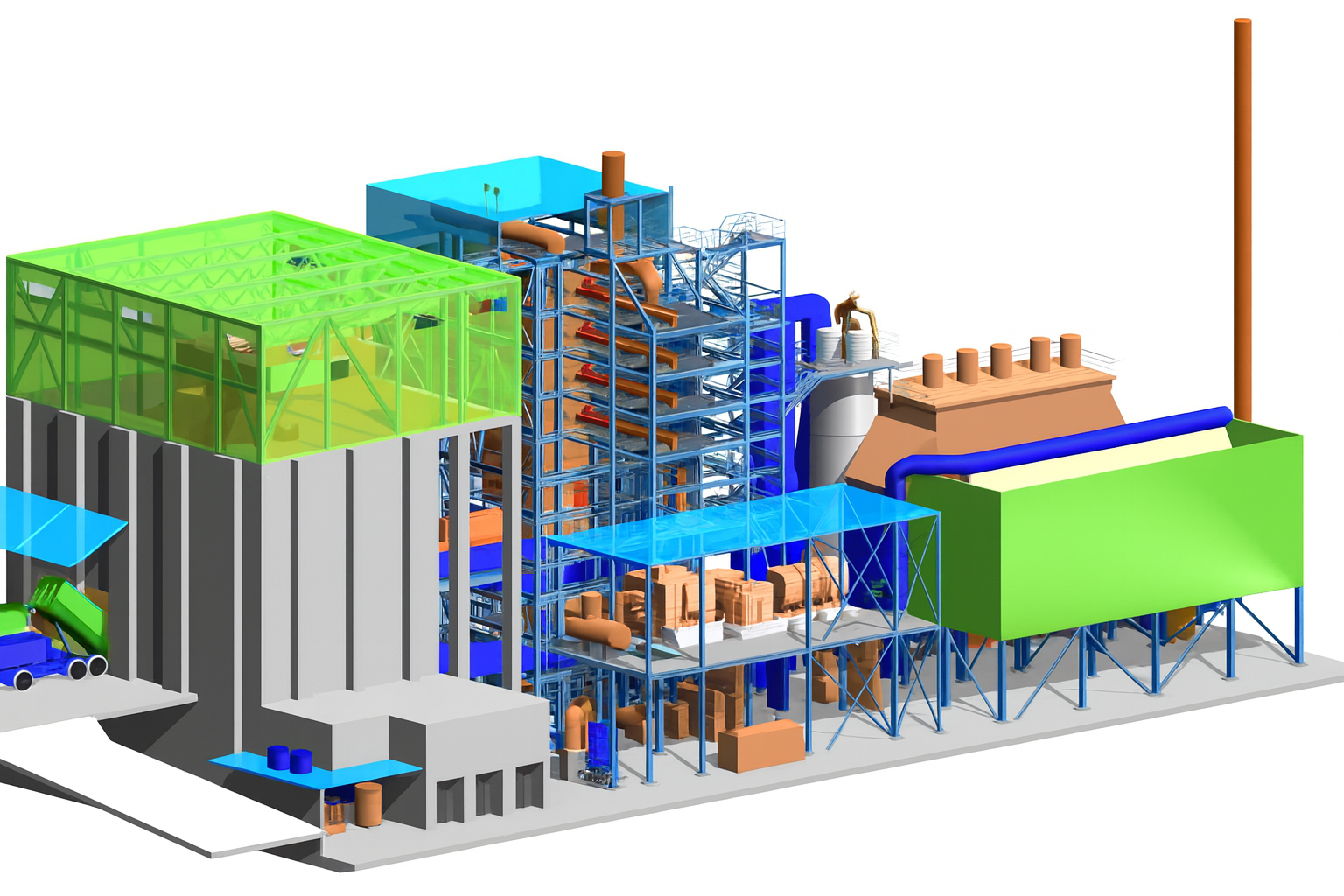
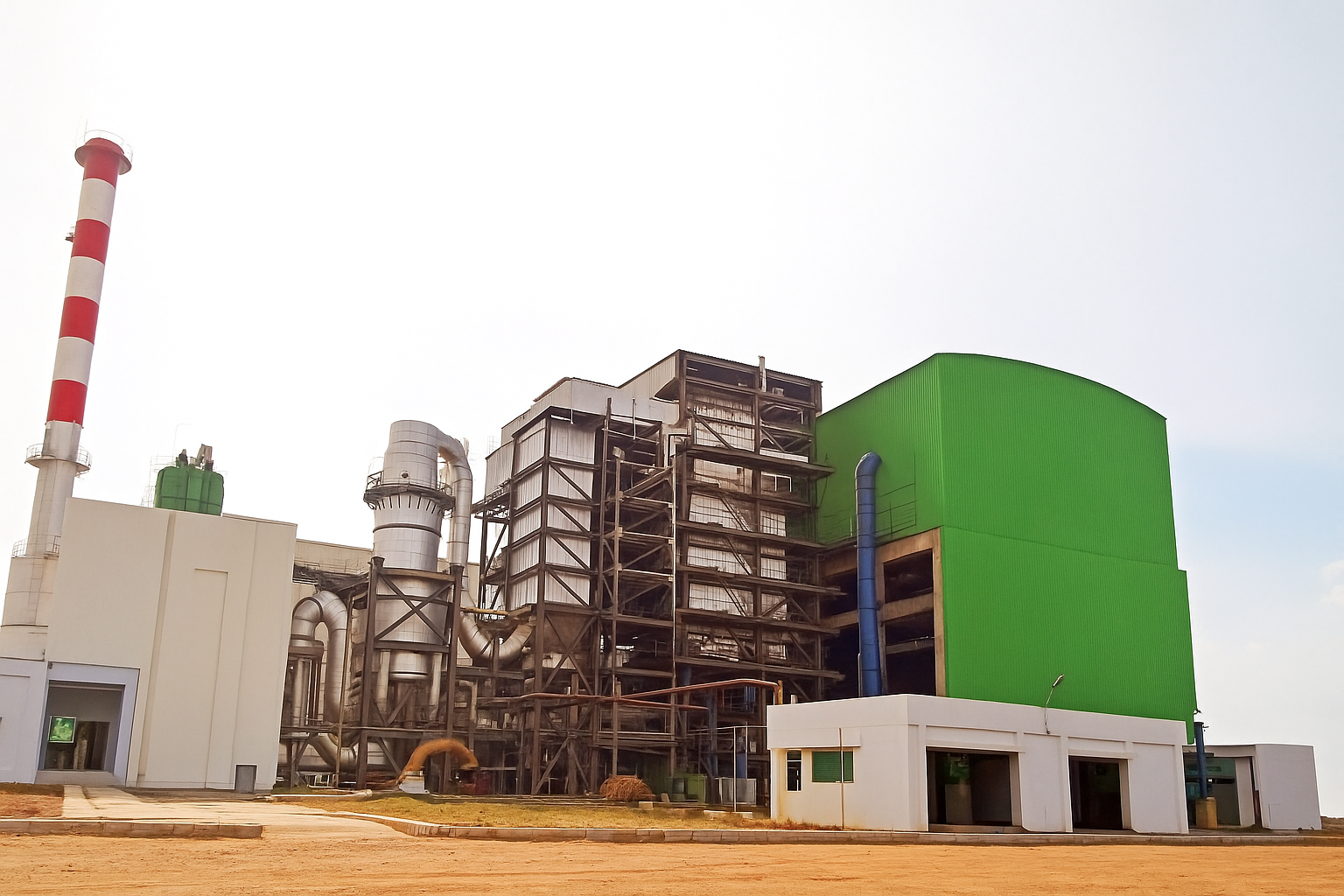
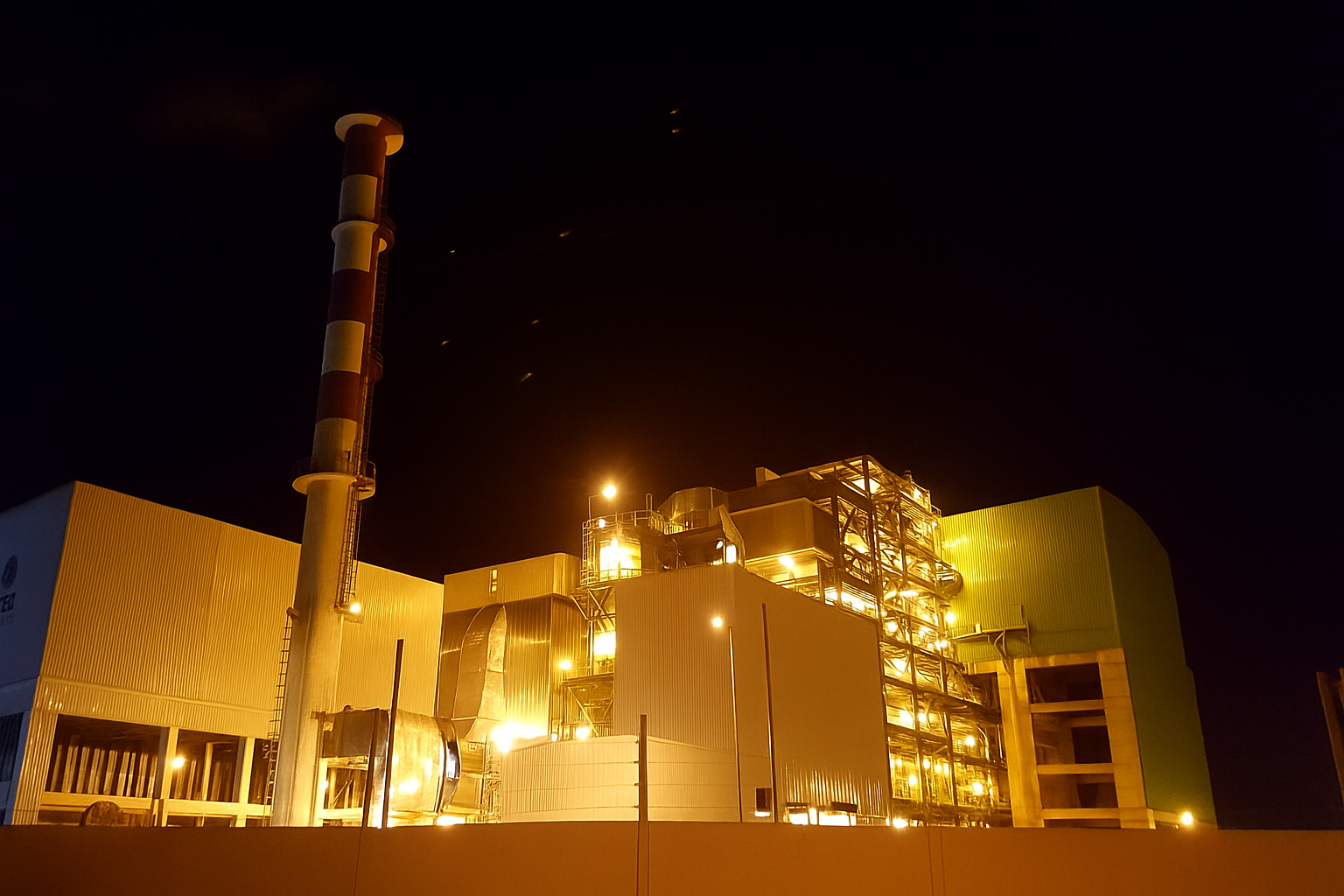
A Waste to Energy (WTE) plant converts municipal solid waste into usable forms of energy—usually electricity or heat—through methods like combustion, pyrolysis, or gasification. It helps reduce landfill use, minimize environmental pollution, and produce clean power from waste streams.
- Municipal solid waste (MSW) or biomass feedstock
- Efficient pre-treatment and segregation system
- High-efficiency combustion or gasification units
- Heat recovery steam generator
- Emission control systems (scrubbers, bag filters)
- Energy recovery and power generation units
- Zero carbon footprint using renewable energy.
- Versatile applications in industry and transport.
- Supports energy storage and grid stability.
- Reduces dependence on fossil fuels.
- Zero carbon footprint using renewable energy.
- Versatile applications in industry and transport.
- Supports energy storage and grid stability.
- Reduces dependence on fossil fuels.
- Zero carbon footprint using renewable energy.
- Versatile applications in industry and transport.
- Supports energy storage and grid stability.
- Reduces dependence on fossil fuels.
- Zero carbon footprint using renewable energy.
- Versatile applications in industry and transport.
- Supports energy storage and grid stability.
- Reduces dependence on fossil fuels.
- Reduces dependence on fossil fuels.
- Zero carbon footprint using renewable energy.
- Versatile applications in industry and transport.
- Supports energy storage and grid stability.
- Reduces dependence on fossil fuels.
- Zero carbon footprint using renewable energy.
- Versatile applications in industry and transport.
- Supports energy storage and grid stability.
- Reduces dependence on fossil fuels.
- Zero carbon footprint using renewable energy.
- Versatile applications in industry and transport.
- Supports energy storage and grid stability.
- Reduces dependence on fossil fuels.
- Zero carbon footprint using renewable energy.
- Versatile applications in industry and transport.
- Supports energy storage and grid stability.
- Reduces dependence on fossil fuels.
- Reduces dependence on fossil fuels.